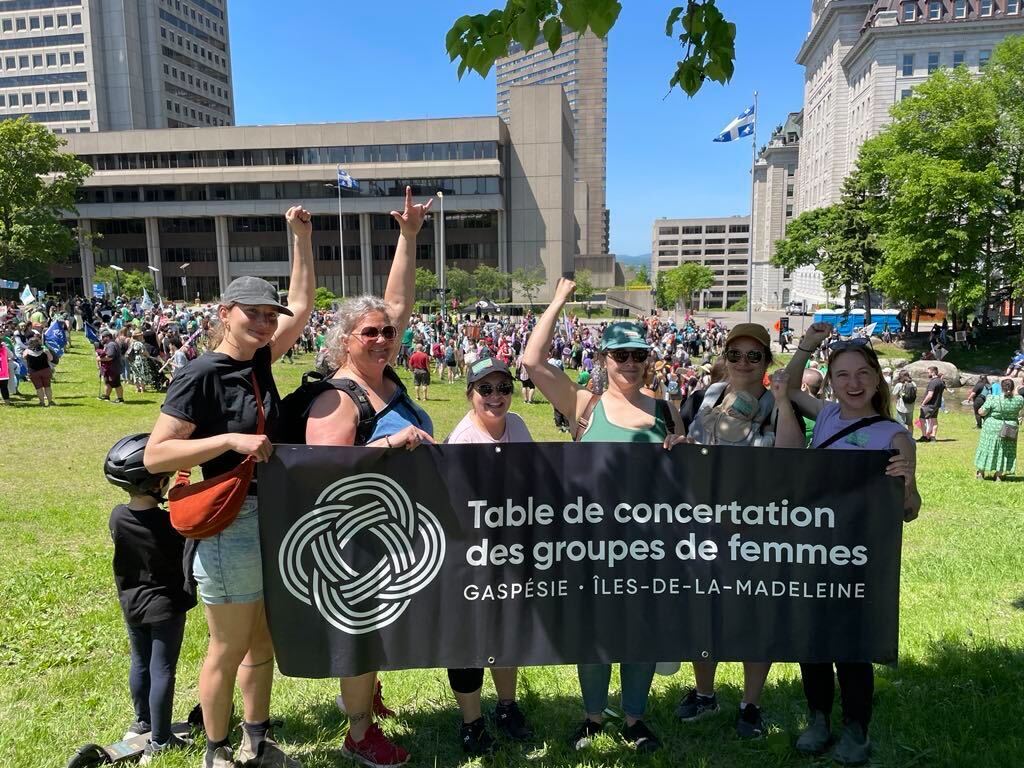
Our Collective Rights Advocacy
The roundtable’s collective rights advocacy is rooted in the pursuit of full recognition, protection, and realization of the human rights of women and people experiencing gender-based oppression. This includes advancing the full exercise of existing rights while advocating for the recognition of rights that have yet to be achieved.

Intersectional Feminist Popular Education
Intersectional feminist popular education is an approach that empowers women to reclaim knowledge, strengthen critical thinking, and engage in collective reflection. Whether in the short or long term, its goal is to foster meaningful social, economic, cultural, and political change within their communities.
For example, in 2024, the roundtable launched the first season of its podcast, Autour de la Table, entitled Femmes et politique (Women and Politics). This ten-episode series features women from across the Gaspé Peninsula and the Magdalen Islands who have been involved in politics in a variety of roles, including candidates, elected officials, political party members, and community activists. By sharing their stories, « Femmes et politique » celebrates the many ways women engage in political life while highlighting the diversity of their experiences and perspectives.

Nonpartisan Policy Analysis
The roundtable’s policy analysis work focuses on developing a deep understanding of the issues affecting women and people experiencing gender-based oppression in our region in order to advance their rights and promote gender equality.
Our policy analysis is strictly nonpartisan. While we advocate for policies that improve the lives of women and marginalized communities, we do not support or endorse any political party.
For example, during the development of Quebec’s Fourth Government Action Plan to Combat Poverty and Social Exclusion, the roundtable submitted a brief entitled «La pauvreté a un genre» (Poverty Has a Gender). The brief examined the systemic barriers to women’s economic autonomy and presented a series of recommendations aimed at reducing poverty and advancing social inclusion.
The roundtable also regularly publishes feminist analyses of current events and public policy, sharing these perspectives through its website and social media channels to encourage informed public dialogue.
Advocacy
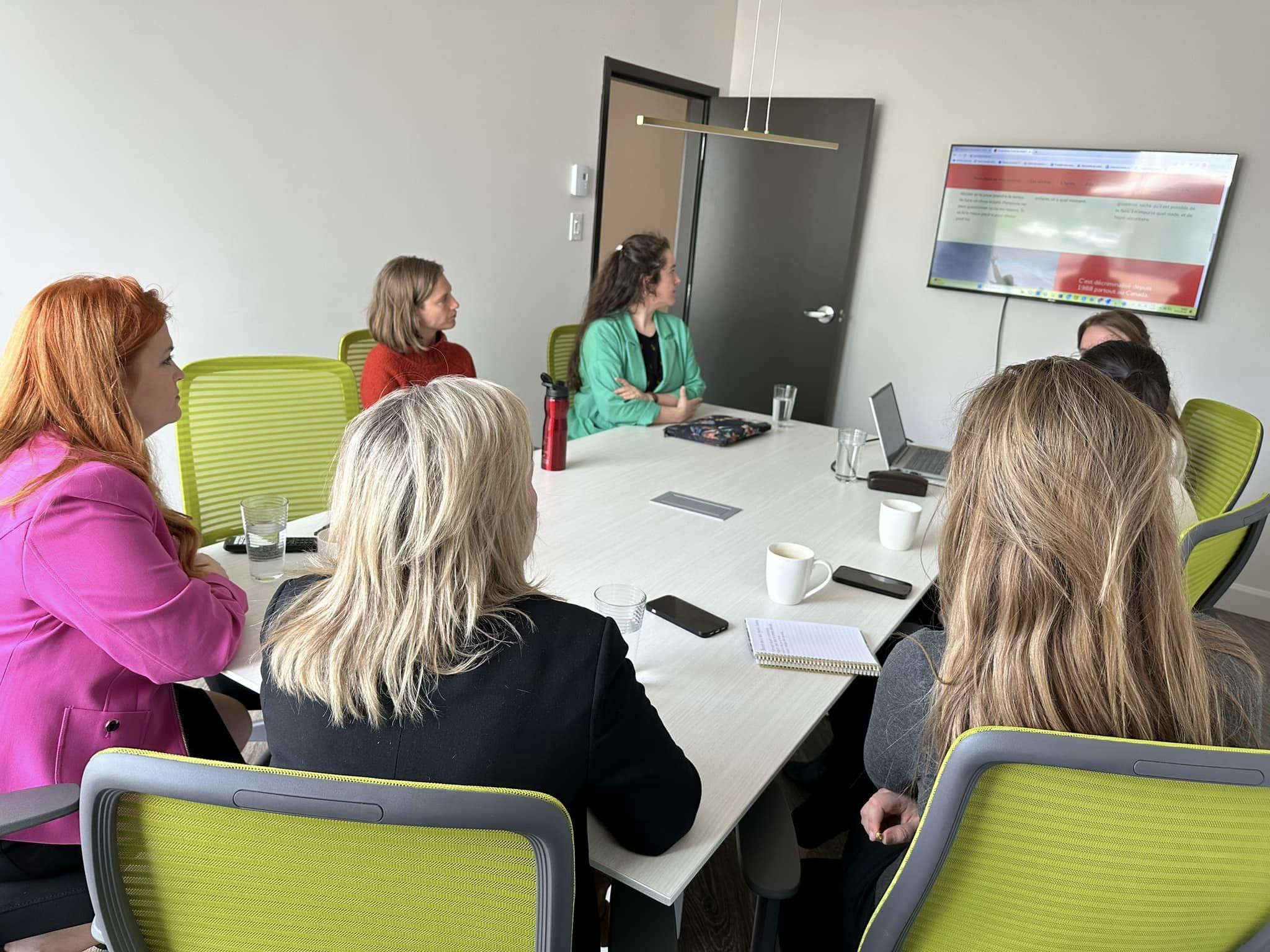
Advocacy enables the roundtable to share its feminist analyses of government policies and directions with elected officials and institutions, or to propose changes that should be made to laws, regulations, practices, or policies to ensure progress toward true gender equality.
For example, Catherine Blouin, the Member of the National Assembly for Bonaventure, and Martine Biron, the Minister for the Status of Women, were met with in May 2023 as part of the minister’s deliberations on reforming Quebec’s legislative framework on abortion. On that occasion, the “My Pregnancy, My Choice” campaign was presented, and the difficulties in accessing abortion services in the region were discussed. The roundtable emphasized the importance of improving access to abortion throughout Quebec.
Mobilization
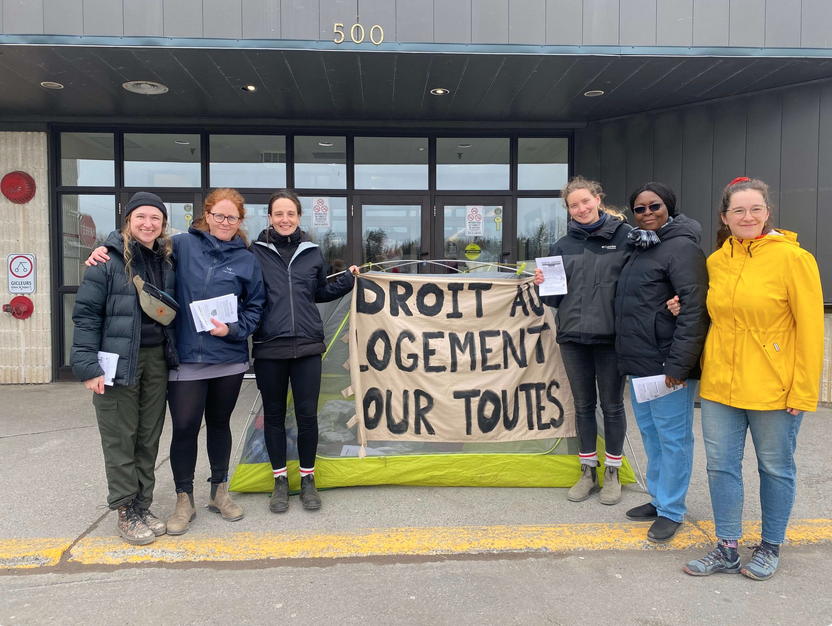
Mobilization is at the heart of the Roundtable’s work. It brings together our members, partner organizations, and community members to take collective action on issues affecting women and people experiencing gender-based oppression. Through collaboration, advocacy, and public engagement, mobilization helps turn shared concerns into meaningful action for social change.
For example, in 2024, the Roundtable joined approximately 100 community organizations across Quebec in a week of collective action and a social strike under the theme “Sick of Being Despised: Together Toward a Social Strike.”
From an intersectional feminist perspective, the Roundtable advocated for the following priorities:
- An end to state violence against women.
- Equal access to free health and social services for everyone living in Quebec, regardless of immigration status.
- A guaranteed income that enables everyone to live above the poverty line.
- The protection and realization of the right to adequate housing for all.
- Better-funded, accessible, high-quality public services that are free and available to everyone.
To support these priorities, the Roundtable organized a variety of awareness-raising and mobilization activities in collaboration with regional partners, encouraging community dialogue and collective action throughout the region.